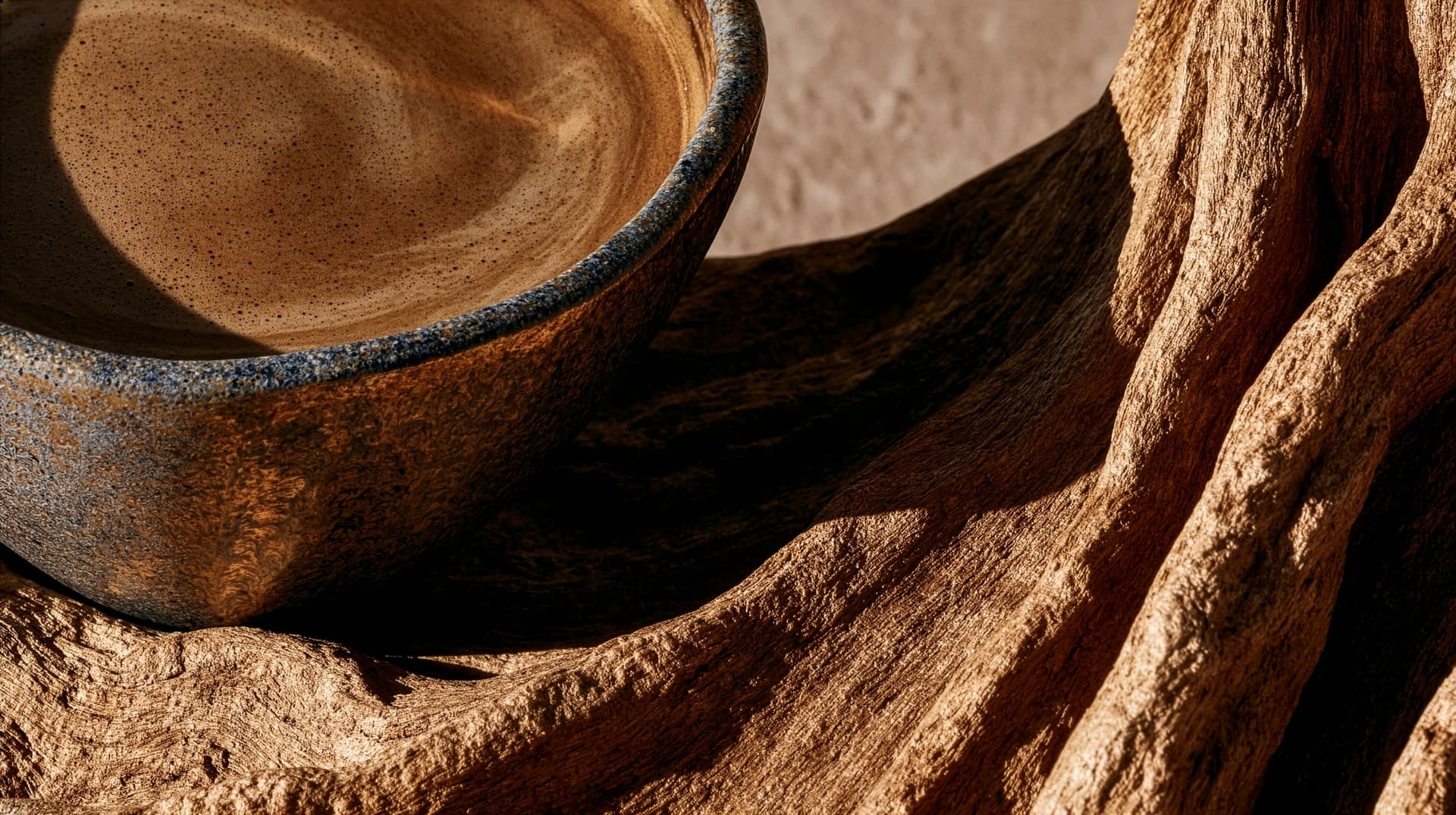
The cup
Roasted Mesquite
Slow-roasted, ground, brewed like coffee. Familiar to a coffee drinker on the aroma, taste, and ritual. The cup is robust and intense without being sharp. A familiar bitterness and naturally sweet in the way raw cacao and cinnamon are naturally sweet, warm and aromatic, not confectionary. One ingredient, nothing added.

Mesquite is the pod of the prosopis pallida tree, which grows wild in the dry forests of northern Peru. Ground, roasted, and brewed for centuries in Peru, from long before coffee was a drink anywhere. The Tallans of Piura called the drink yupisin. The Quechua call the tree huarango, "the thousand," for its long life. The Spanish reached for their nearest name and called it algarrobo. One tree, many names, one cup.
- Origin
- Piura, Peru
- Process
- Wild-harvested, slow-roasted
- Profile
- Robust · rounded · roasted
- Notes
- Toasted · cacao · cinnamon
- Species
- Prosopis pallida
- Body
- Full and rounded
- Caffeine
- None, naturally
- Weight
- 400g (fifty cups per bag)
Brewing guide
Brew as you would coffee.
Whatever your method: espresso, pour-over, French press, moka pot, cold brew. Horizon works with all of them.
Espresso: 1 tablespoon for a single shot, 2 for a double. All other methods: 1 to 2 tablespoons (8 to 16g) per cup.
Adjust to taste.
What's in the bag
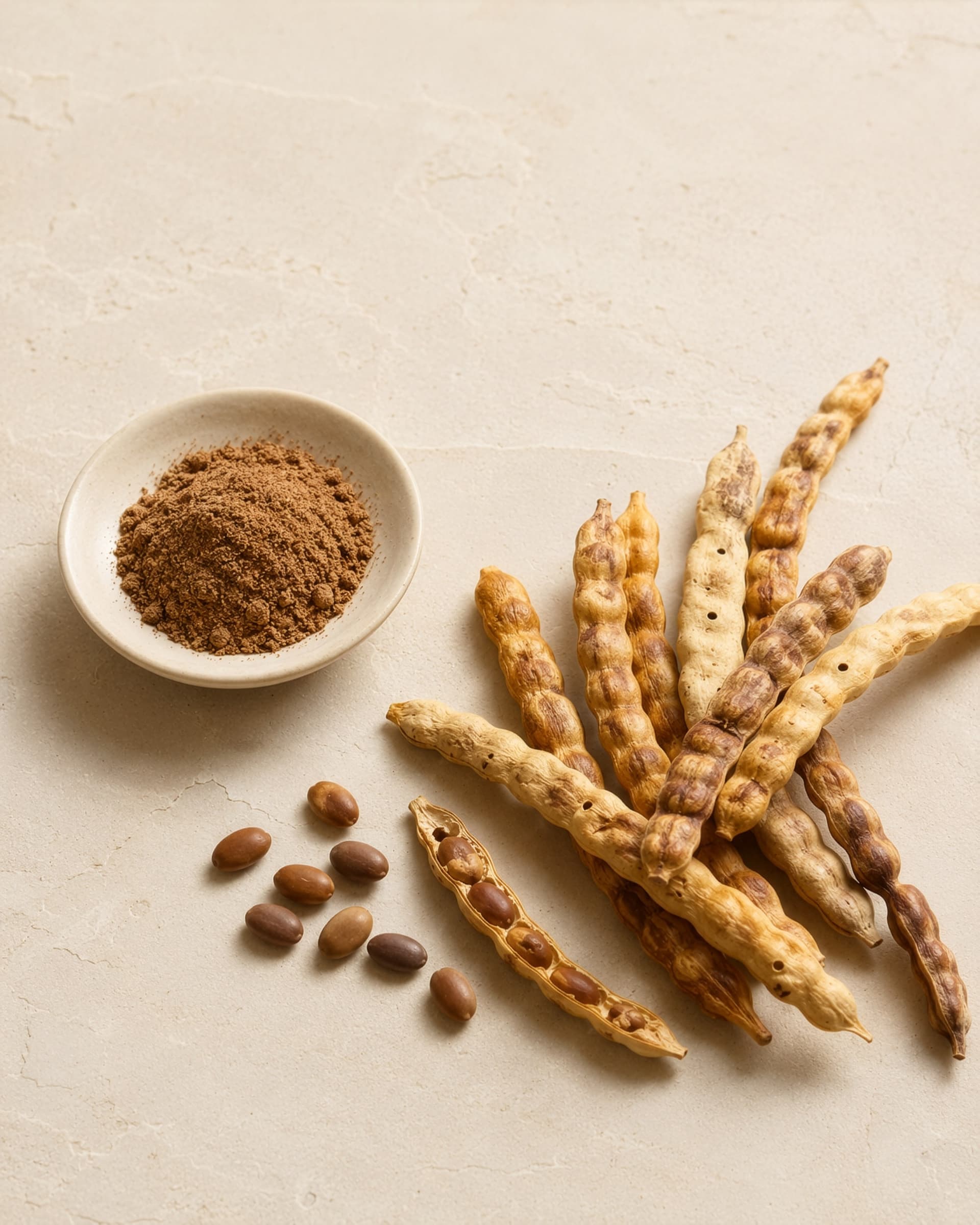
A cup with coffee's shape
Warm, robust, rounded. Familiar to a coffee drinker. Same brewing methods, same grind, same ritual. Cacao-adjacent on the aroma, with a trace of cinnamon.
Without the jitters, without the crash
Naturally caffeine-free. No spike, no afternoon dip, no evening rebound. Fine after dinner. Works with any milk, plant or otherwise.
Nutrient-rich, not a stimulant
Iron, calcium, magnesium, potassium, and 13-17% protein by weight from the pod itself. A steady warmth from what the body absorbs slowly, not from a stimulant.
A different case for the morning
A cup without the edge
Warm and rounded rather than sharp. Naturally caffeine-free, so no spike, no crash, and no evening rebound. Fine after dinner, without affecting sleep. Even if you skip a day, no headache, no withdrawal.
A cup the body reads slowly
Iron, calcium, magnesium, potassium, and 13-17% protein by weight. A steady warmth from what the pod carries, not from a stimulant. Traditional Chinese Medicine and Ayurveda both classify this kind of drink as nourishing rather than stimulating.
A cup with a place
Wild-harvested by hand in the dry forest above Piura. Nothing planted for it. Nothing irrigated for it. Gathered by communities working the same forest for generations, compensated fairly for the harvest.
"One family of tree. Many names. One cup."
"A different chemistry having a different conversation with the body."
"The ritual outlives whatever fills the cup."
Questions
Does it taste like coffee?
Yes, and it is its own cup. Warm, robust, and rounded. Familiar to a coffee drinker on the aroma, taste, and ritual. Cacao-adjacent, with a trace of cinnamon and a familiar bitterness. Not sharp. Not confectionary.
Do I need a grinder?
No. It comes pre-ground and ready to brew. A versatile grind that works across the main methods: espresso, pour-over, French press, moka pot, and cold brew. No adjustment needed.
Does it work with milk?
Yes, with any milk you already use. It works especially well with cow’s milk, oat milk, and almond milk. Same milk ratio you would use for a latte or a flat white.
Can I mix it with coffee?
Yes, and many drinkers do. One shot espresso plus one shot mesquite in the morning is a common bridge. When the afternoon arrives, switching to only mesquite keeps the taste and drops the caffeine.
Is it a stimulant?
No. It contains no caffeine and no added stimulants. What the body gets is the nutrients, fibre, and minerals in the pod itself, absorbed slowly.
Is it more expensive than coffee?
Comparable to premium single-origin coffee per cup, and less per serving than most coffee alternatives on the market. Wild-harvested by hand, not scaled the way industrial coffee has been scaled. The price reflects the harvest and fair compensation for the Peruvian communities who gather it, not a markup.
How long does a bag last?
A 400g bag makes about fifty cups. That is roughly seven weeks at one cup a day, or a month if you drink more than one, which most people end up doing.
What is the caffeine content?
None. Mesquite is naturally caffeine-free, so no spike and no afternoon dip. Unlike decaf coffee, which still contains a small amount of caffeine even after processing, mesquite has none to begin with. Fine for the evening, fine after dinner, and it will not affect sleep.
Is it gentler on the body than coffee?
Yes. Lower in acid than coffee, so no reflux. Fewer tannins, so no tooth staining over time. Gentle on the stomach and gentle on enamel.
How do I store it?
Keep the bag in a cool, dry place away from direct light. The doypack has a zip-seal that holds freshness between brews.
Same ritual. Different ingredient.
Roast 001 arrives late 2027. We will write to you when the first bags are ready to ship, and between now and then only when there is something worth saying.