Body
The body knows.
The body is a quiet instrument. It does not write op-eds. It does not produce thesis statements. It does not argue. But when something goes in (food, drink, medication, stress), the body produces a report. The report is honest. The report is also slow. If you have ever felt different at three in the afternoon depending on what you had at eight in the morning, you have read your body's report. The skill is in trusting it.
What the body reports about a cup of mesquite is, in the first place, the absence of certain familiar things. There is no caffeine. There is no spike. There is no jitter. There is no afternoon dip that asks for the next cup. The cup contributes without first taking something.
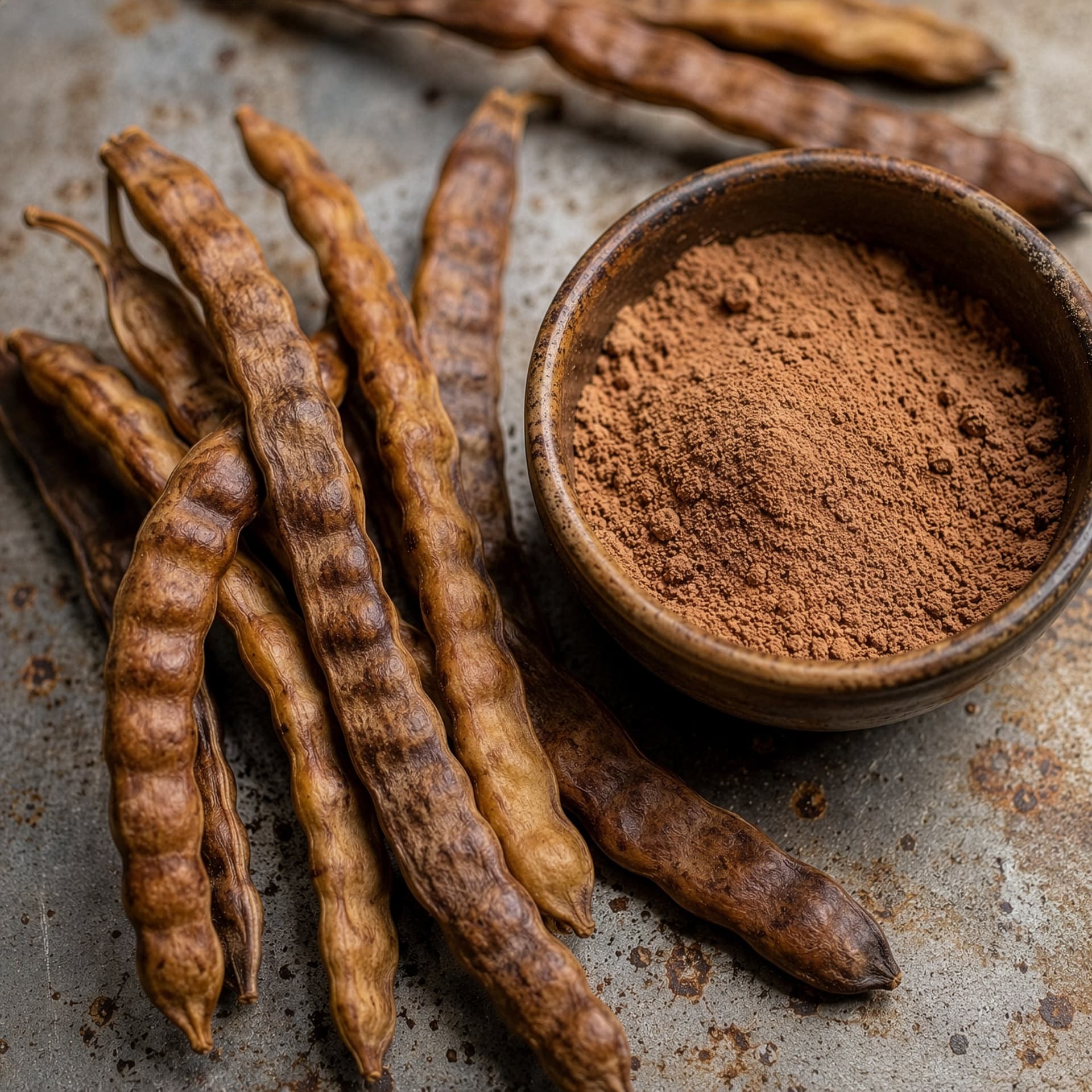
What the body does receive is mineral and material. Roasted mesquite pod carries iron, calcium, magnesium, potassium, and zinc, drawn up by the tree's deep root system from soil that has been undisturbed for centuries. The pod is roughly 13-17% protein by weight, and more than that again in fibre. Some of that fibre is a soluble carbohydrate called galactomannan, which feeds the bacteria that live in the gut. The body recognises what is going in. It does not have to translate.
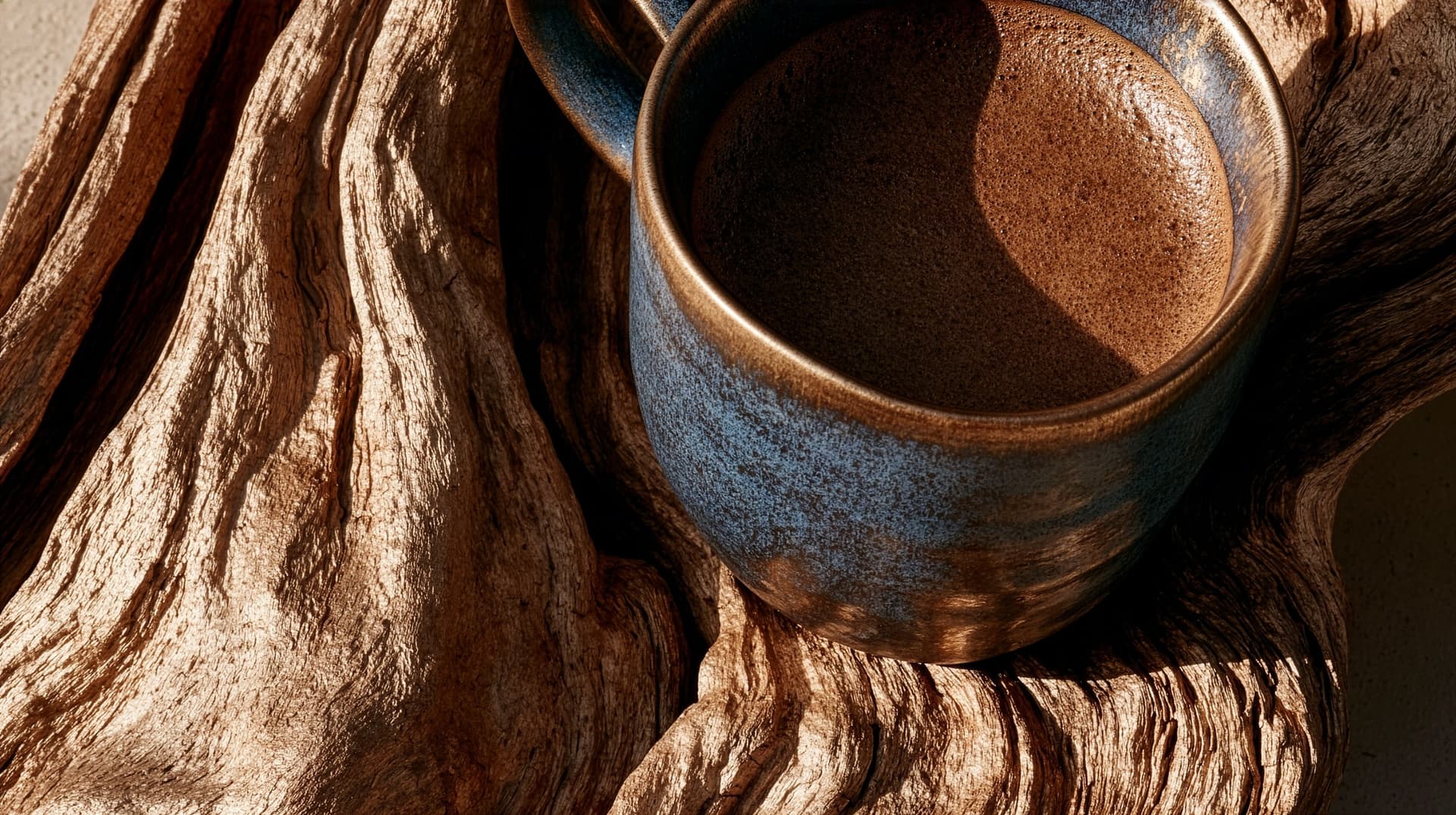
The cup is robust and intense, rich and warm, with body and a subtle natural kick. Naturally sweet in the way raw cacao and cinnamon are naturally sweet, warm and aromatic, not confectionary. Familiar to a coffee drinker but rounded rather than sharp. The pod carries natural sugars at low concentration, and what they do inside the body matters more than where they land on the tongue. The fructose is bound in a matrix of complex carbohydrate and fibre that the body absorbs slowly. The body's blood-sugar response is gentler than with a refined sweet. The body's report half an hour after the cup is the same as the body's report at the moment of the cup.
The cup contributes without first taking something.
Traditional Chinese Medicine has its own framework for describing food. The qualities that matter are categorical flavour and thermal temperature. In TCM's framework, the mesquite cup sits inside the sweet-and-warm category, the warm-aromatic sweetness of roasted grain teas and brewed roots, not the confectionary sweetness of sugar. The category supports what TCM calls the Spleen and Stomach systems: the body's capacity to take what comes in and turn it into usable energy. This is a cup that contributes to the body rather than borrows from it. Ayurveda classifies the related Indian pod, khejri, in parallel terms: sweet and astringent in rasa (the Ayurvedic taste category), nourishing in effect. The framework is centuries old. The recognition is new.
This matters most to people who are paying attention to their nervous system. The somatic awareness movement has spent the last decade teaching people to notice what comes in and how the body responds, not in the head but in the chest, in the breath, in the quality of sleep three nights later. Once the noticing starts, it is hard to stop. A cup that contributes rather than extracts becomes preferable not because of an argument but because of the body's report at the end of the day.
The body knows the difference between a cup that lifts and a cup that nourishes. Both can be enjoyed. Both can have a place in a life. But the body's report at the end of one is different from the body's report at the end of the other. We made the cup for the second kind of report. For the days when the body is being listened to.